Table of Contents
Project Overview
Preamble
Trini-Tree
Calmness
Aftermath & Outlook
Project Overview
The Floating Island project adresses a small collection of dreamy dioramas dedicated to nature and calmness. Some basic objects in the presented scenes - like the huge snake-like tree - or complex terrains were made in Moi3D or Nomad Sculpt; and later imported to Magicavoxel. The majoritoy of modelling and rendering job featured in this project was made in free 3d graphic software Magicavoxel by Ephtracy. Post-processing was made with 2D applications like Photoshop.
A by-product of this project was a technique on how to generate realistic voxel grass in Magicavoxel software.
This series combines large-scale voxel scene construction, imported base meshes, and hand-made vegetation work to create calm, dreamlike environments with a strong handcrafted feel.
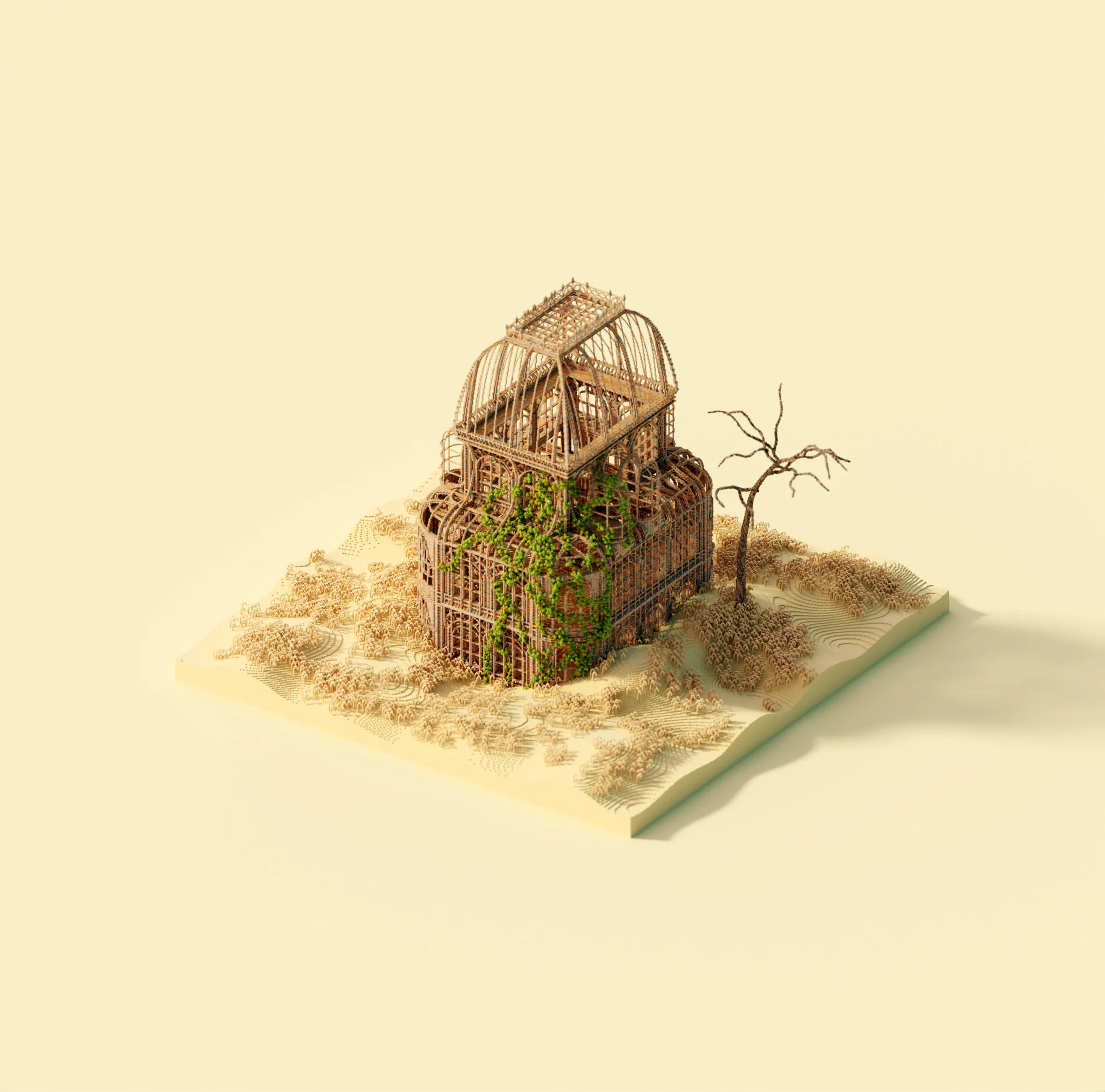
Dryland, which was the prototype that triggered my voxel art dioramas
Preamble
This project was planned as as small series of large dioramas ...
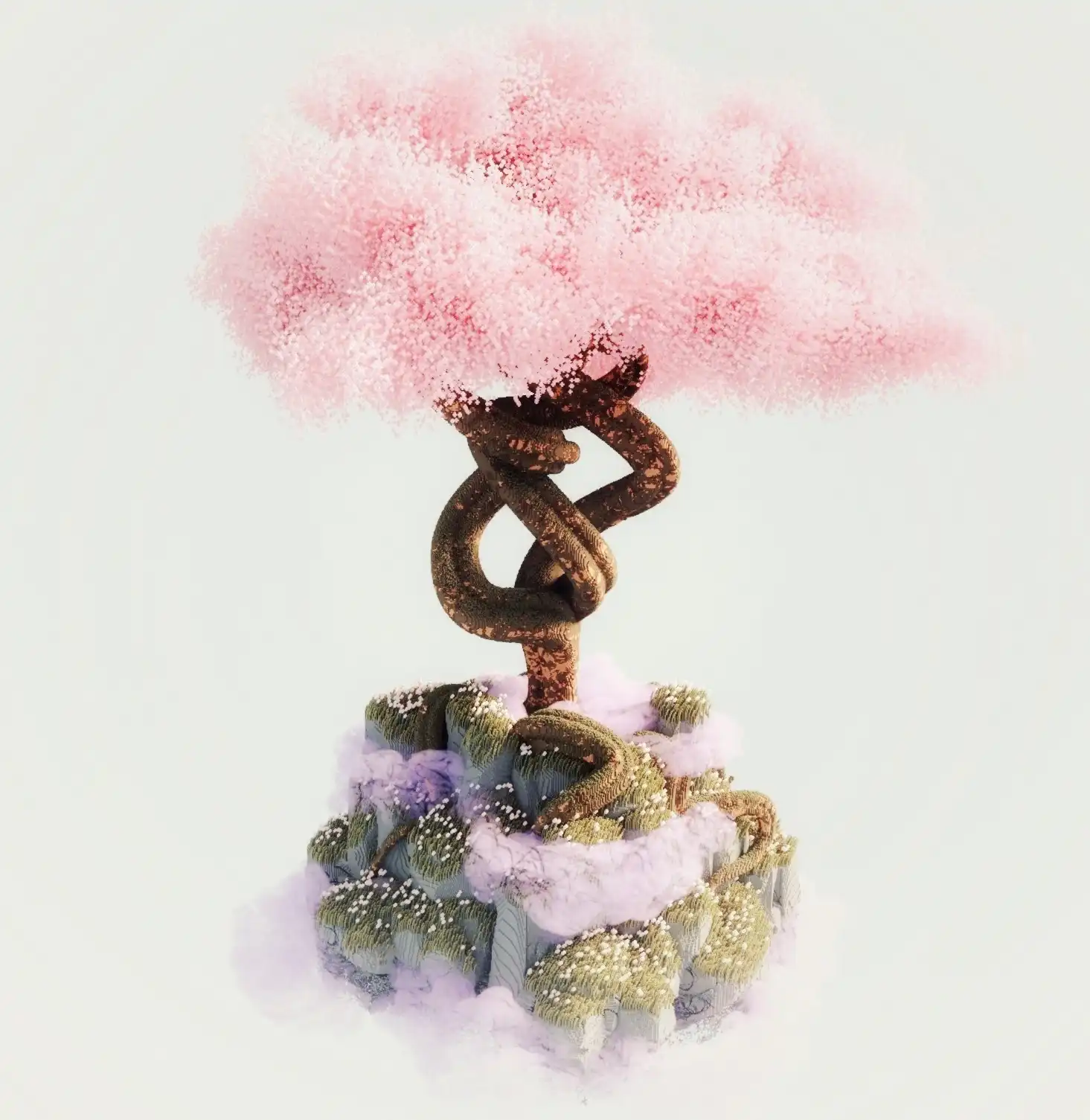
- Trini-Tree: snake-shaped tree on a rock
- Calmness: idyllic mountain scene in the clouds
- Victoria: Victorian Steampunk city
- Snake's Pit: ancient temple ruins
Each diorama had a different topic and style. From the beginning the "Floating Islands" collection became a challenging project because of its scale (up to a voxel volume of 1000^3), the complexity of the assets; and the fact that I didn't want to use shaders for generating automated vegetation. In retrospect those self-imposed limitations resulted in developing unique techniques in MagicaVoxel to ...
- Placing and arranging hand-made grass on complex base topology like rocks and free form voxel surfaces.
- Managing to animate floating grass (which was a side product of the 1st technique).
- Managing to animate grass during turn-table render.
Considering my actual knowledge, modeling and assembling those huge diorama scenes from scratch would accompany with 12h - 24h of work. The immense amount of work for creating such large concepts designs forced me to temporarily quit this series after the 2nd scene.
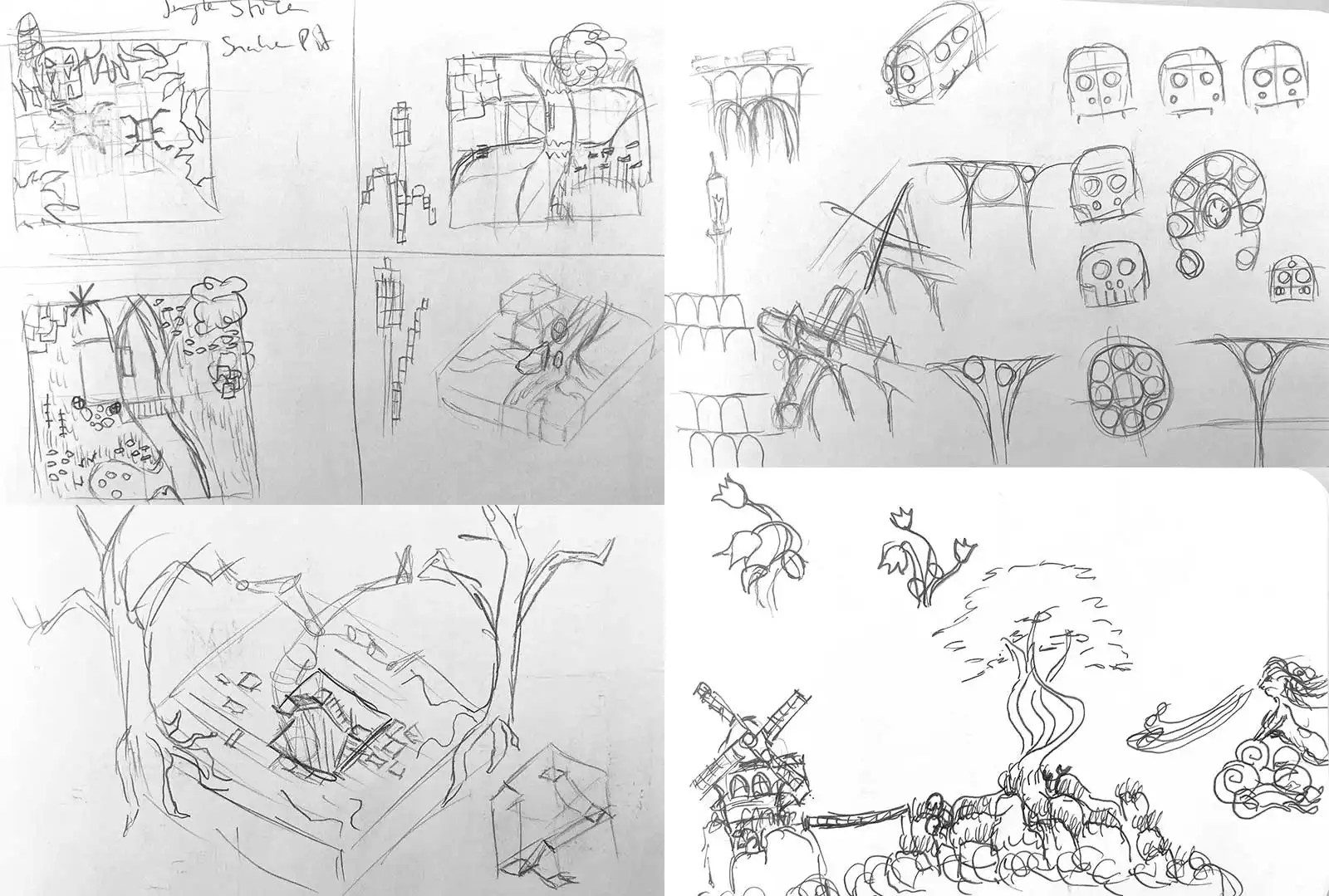
Early concept sketches
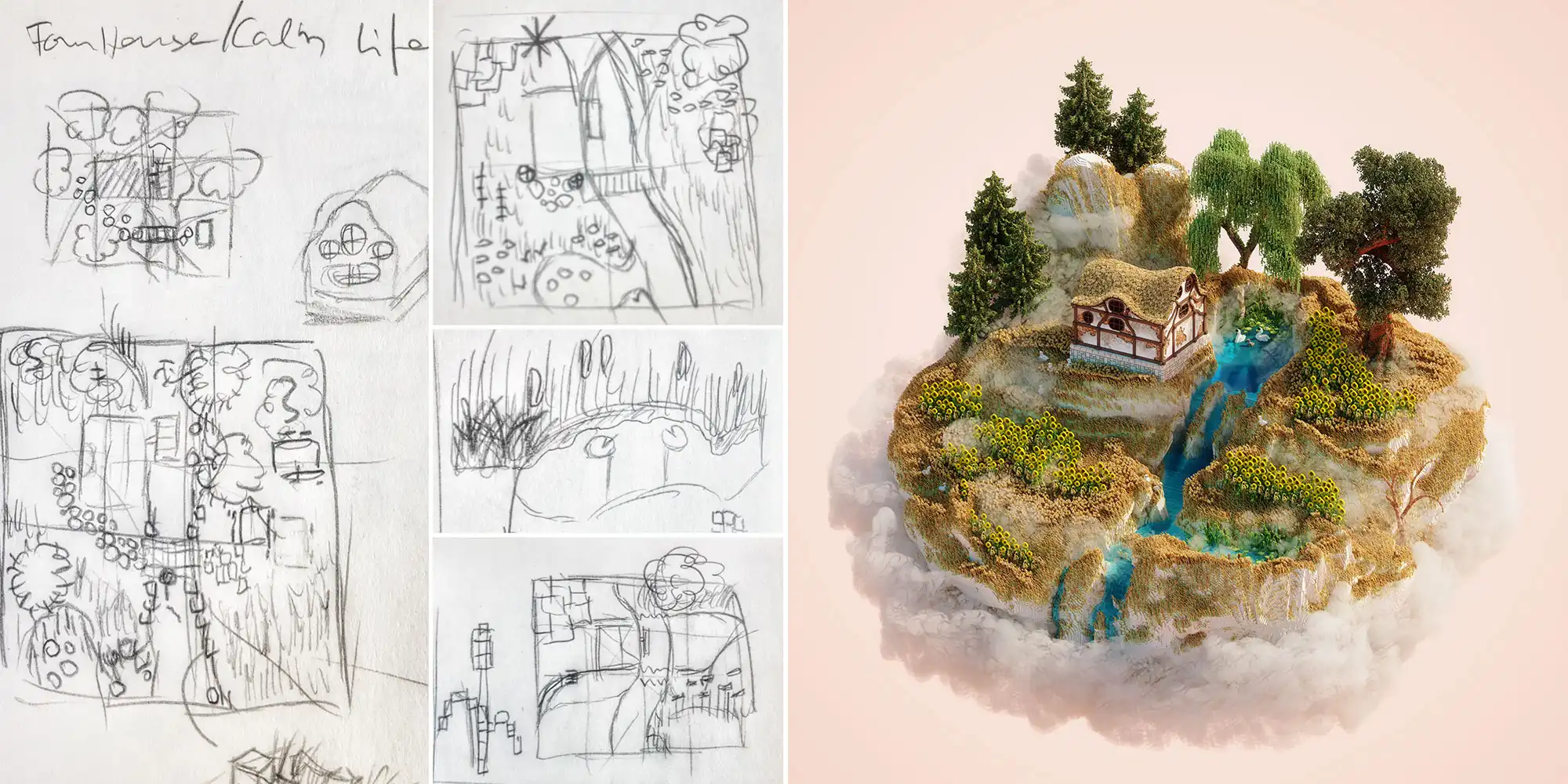
From scratch to final render
Design Rules
1 Large voxel scenes require clear scope limits.
2 Imported base forms can accelerate organic structure building.
3 Manual vegetation creates stronger visual identity than automated solutions.
4 Scene scale increases both asset complexity and maintenance cost.
5 Technical limitations can become part of the project’s signature look.
Trini-Tree - トリニ・ツリー
My 1st really complex project addressed a fanart refering to Seiken Densetsu 2 (Secret of Mana) franchise (by Squaresoft) and Donkey Kong from Donkey Kong Country franchise (by Nintendo). Both SNES titles are my all-time favorite video games so it was logical to make a fanart project in MagicaVoxel. To achieve an organic, snake-like structure I modeled the base structure of the tree in Moi3D. It is a simple process. All you need ist using a B-splines as lead curve and 2D curves that represent the cross-sections of the resulting tree segments. Then I exported the tree as obj file and imported last named to MagicaVoxel.
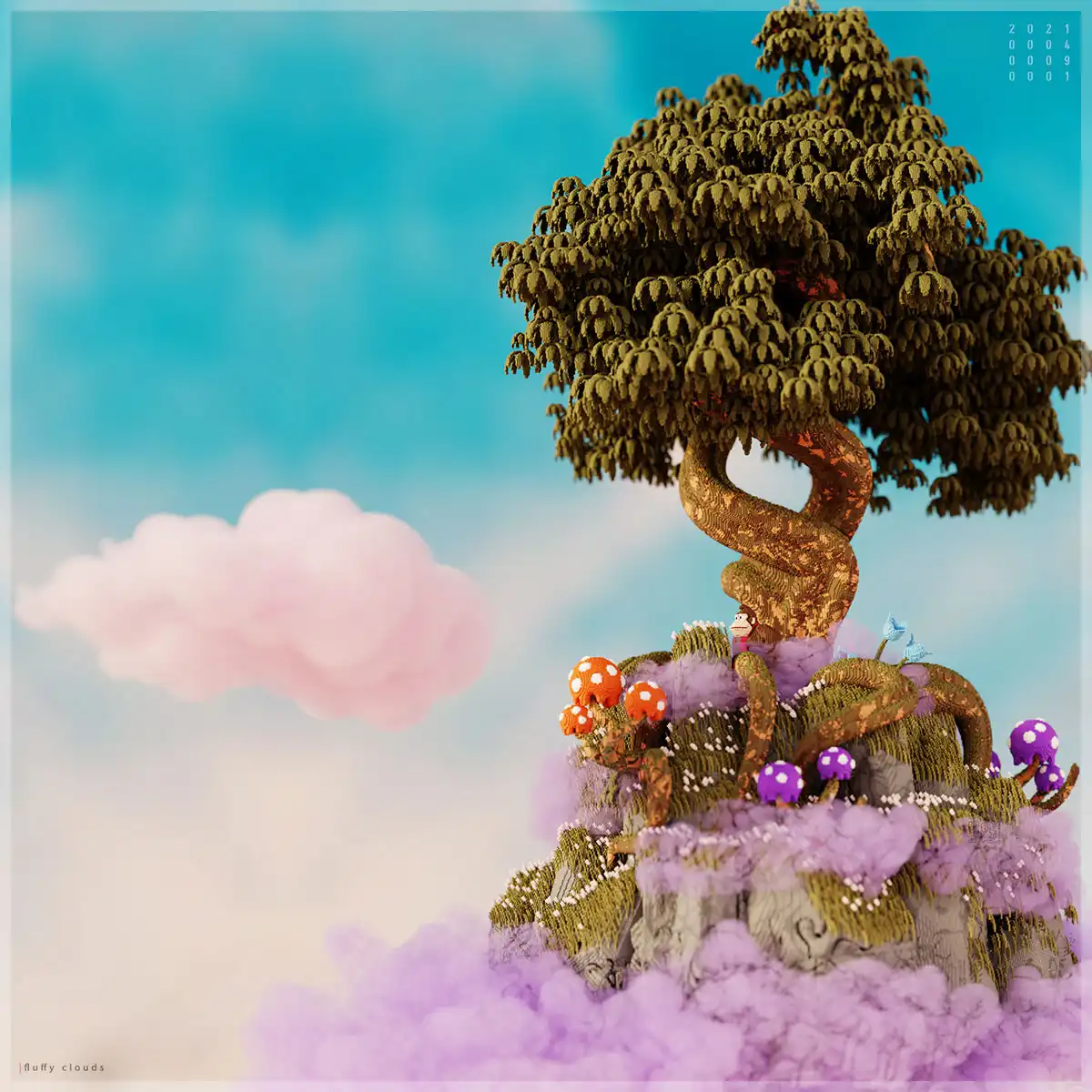
Trini-Tree
It is not easy to create realistic grass on complex surfaces inside Magicavoxel without using 3rd party shaders. However, there are techniques that can be very helpful to support the manual process. While modelling the Trini-Tree scene I discovered a technique how to solve this problem. I described this technique in a tutorial that I plan to release when the time is right.
How to start?
- Build the organic base structure outside MagicaVoxel if needed.
- Import complex forms as a starting scaffold.
- Add vegetation manually where surface readability matters most.
Calmness - 落ち着き
Calmness is the 2nd entry of the Floating Islands collection. This artwork represents a calm and peaceful place in the sky. This rocky island in the clouds is covered with dense ground vegetation (sun flowers and corn fields) and has some complex trees on it. In the center of that floating island is an old farm house and a pond which consists of a higher and lower part. From technical point of view this is the most complex scene I've ever did. You need to zoom-in to realize that it is made of voxels. Over the time I modified the scene by adding an underground entrance and landing place for a hot-air balloon.
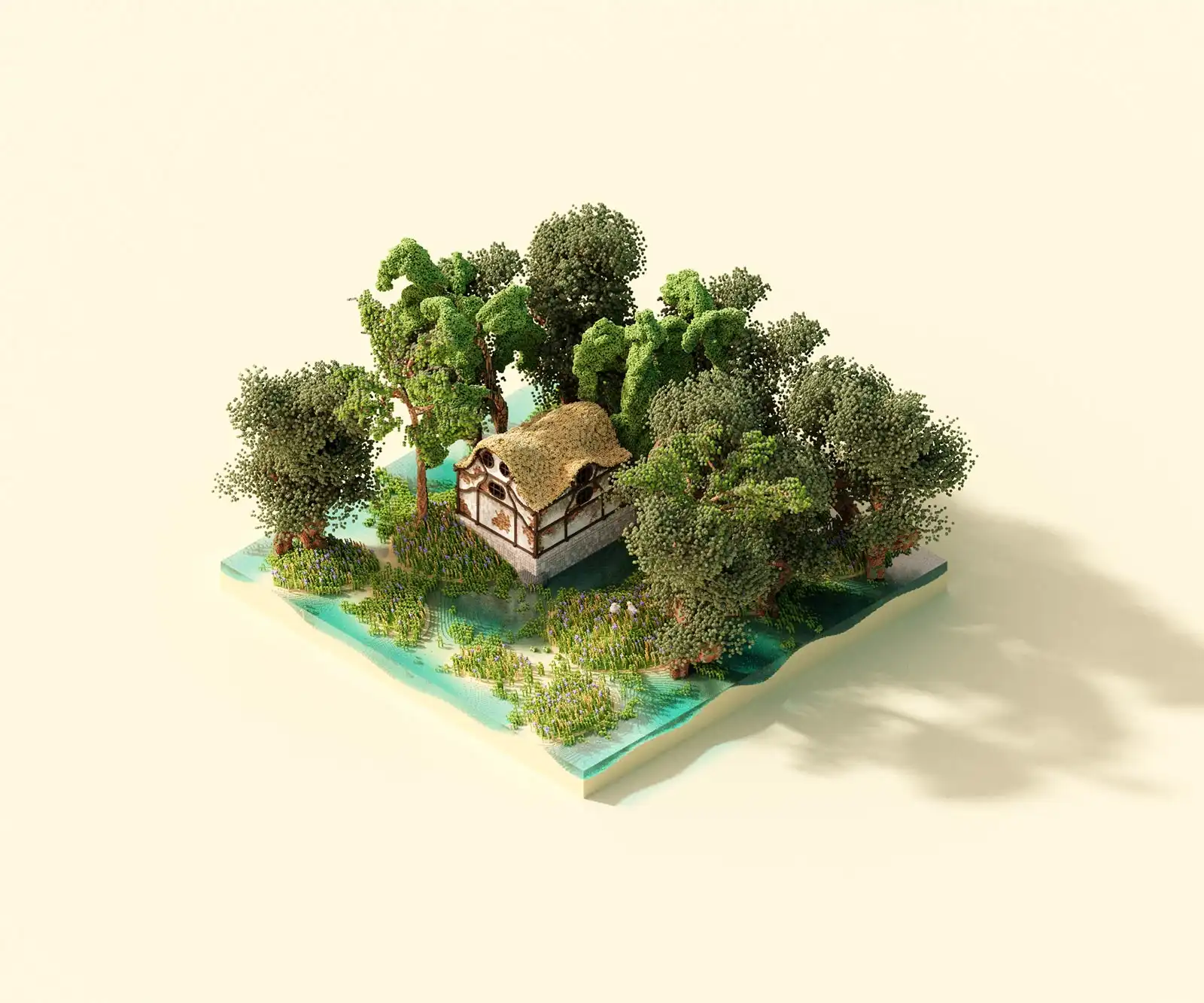
1st prototype
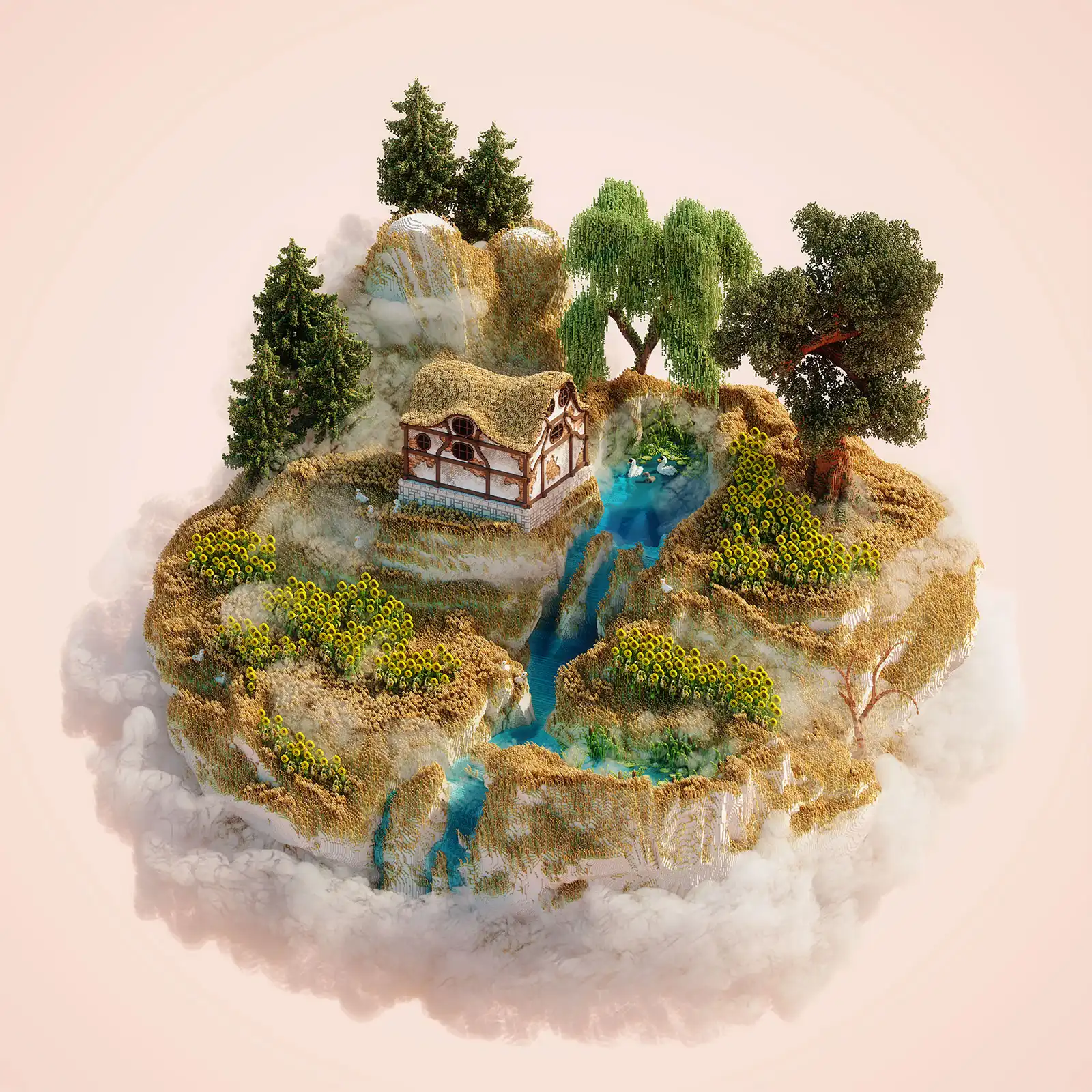
Just a rocky island in the clouds
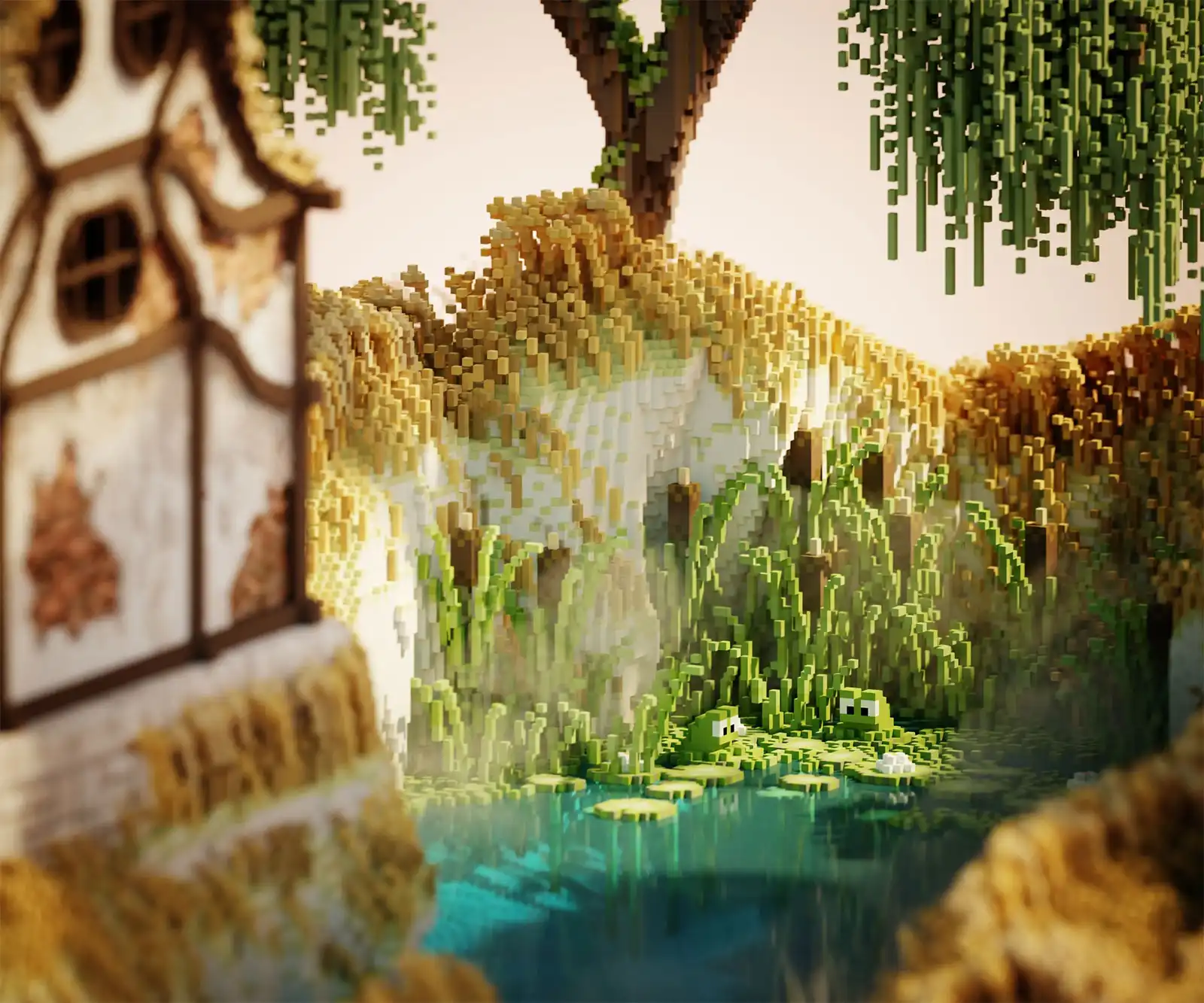
Zoom on the pond
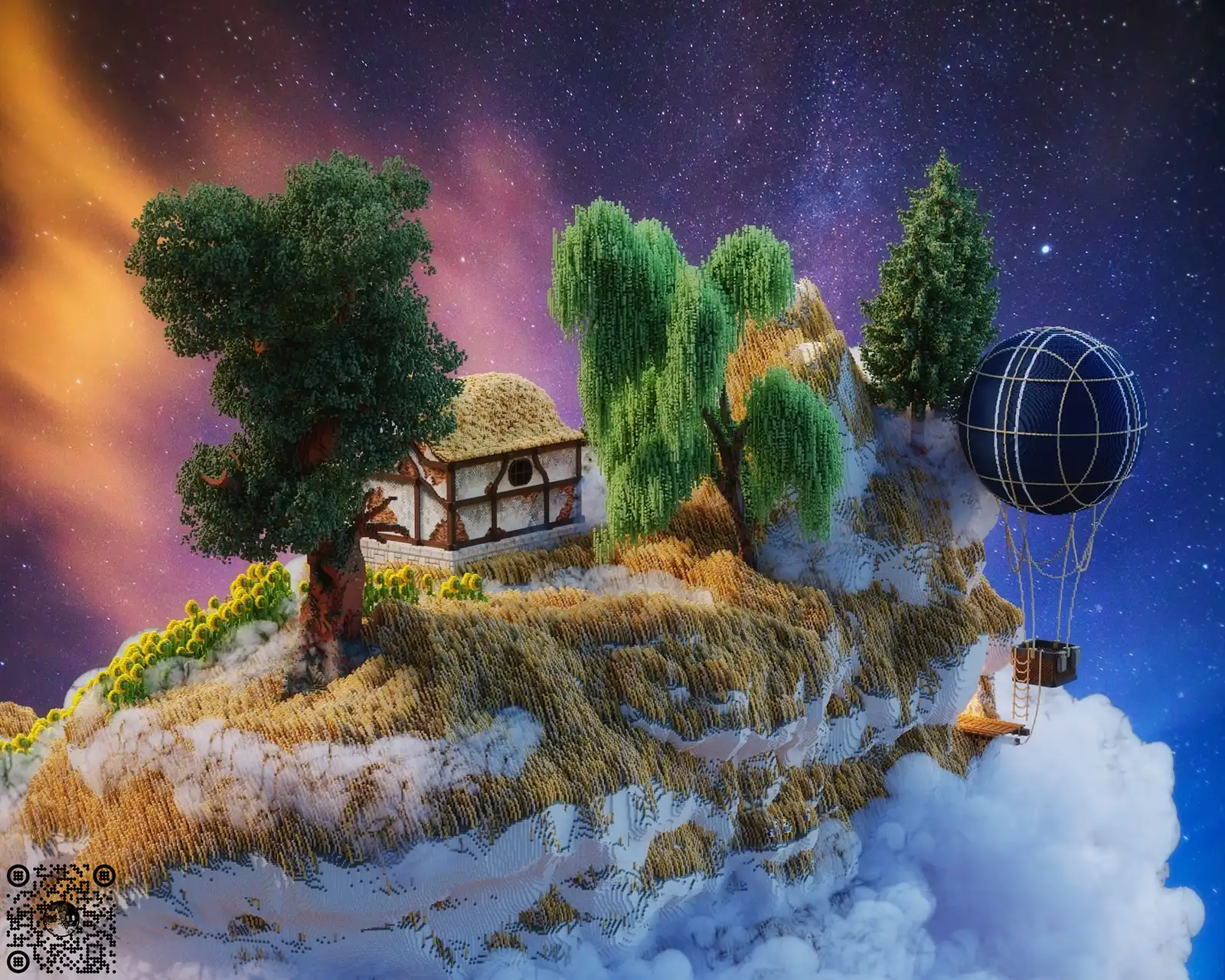
Remastered scene from a diffrent angle
Calmness represents the project at its most ambitious: dense vegetation, large terrain massing, architectural focal points, and a scene scale that only reveals its voxel nature at close inspection.
Aftermath & Outlook
2025|12|30
The last mentionable projetcs that I did in this direction after "Calmness" was my "Goblin Cave" scene that I made with Nomad Sculpt. Later I re-used this rocky floating island for a more friendly scene where I once again placed voxel grass and adapted some advanced techniques from real world HDR photography to realize a more vivid render. Which became a powerful byproduct for future scenes.
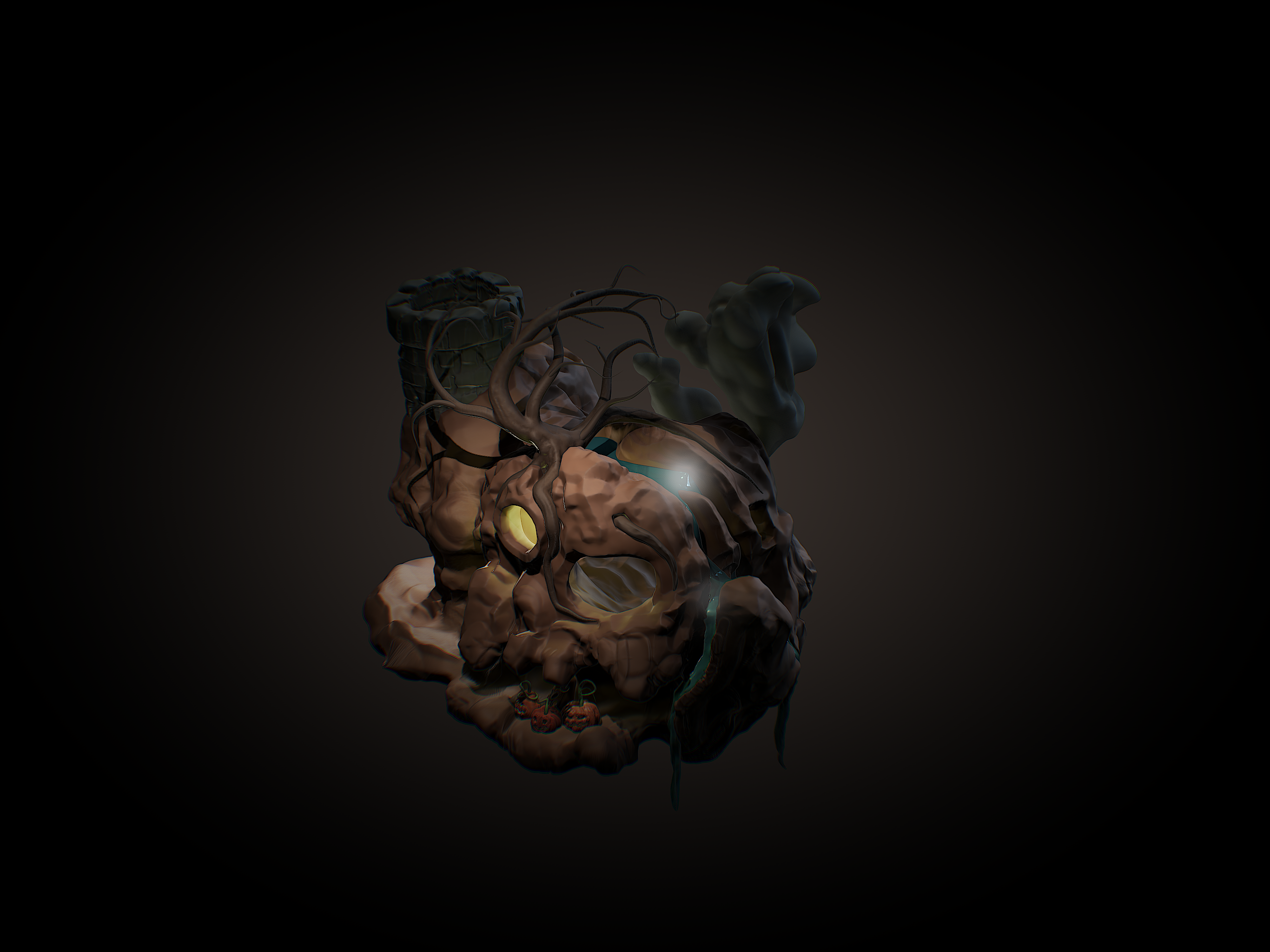
Goblin Cave, modelled and rendered in Nomad Sculpt
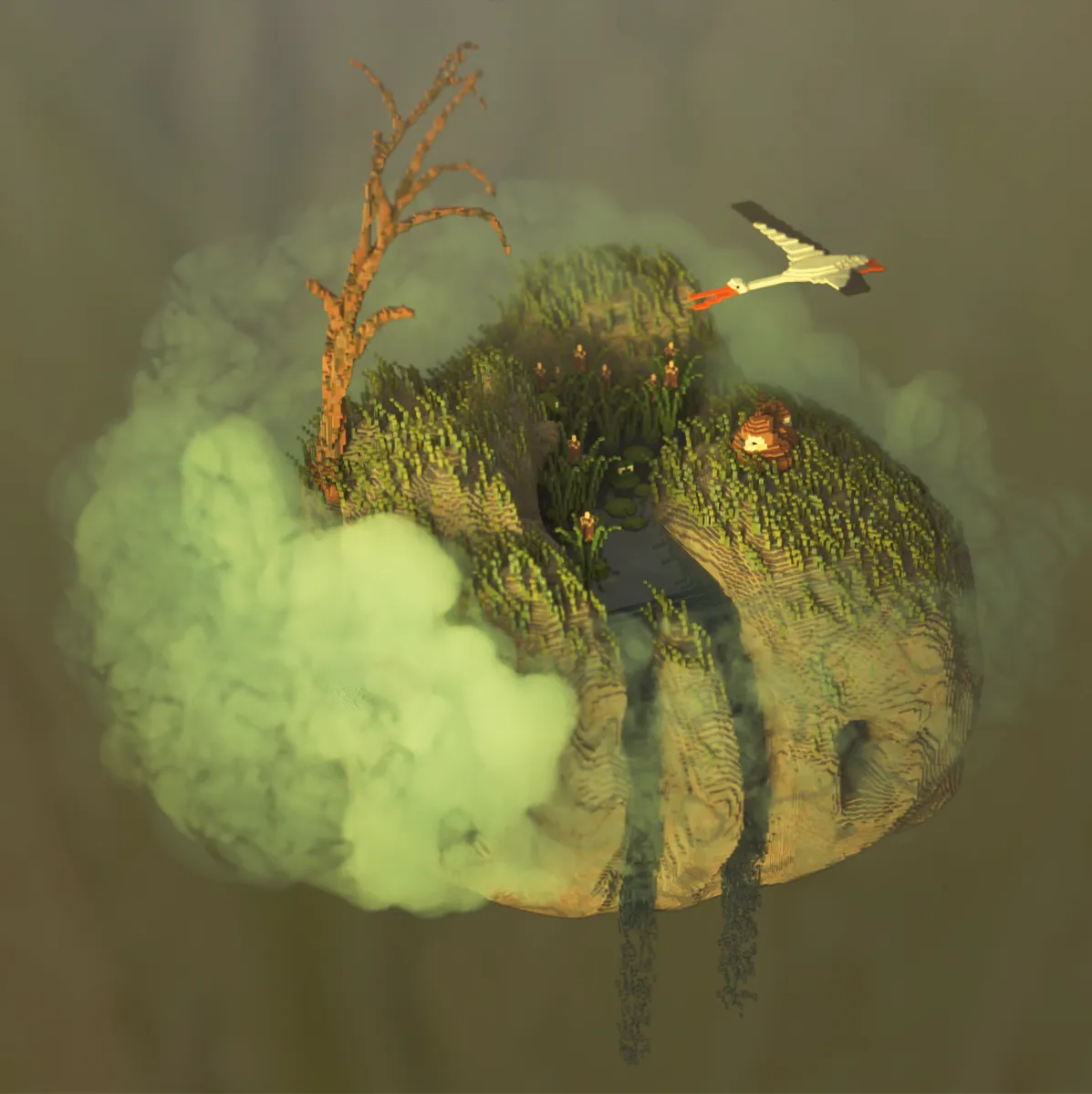
Island, which bases on the Goblin Island scene made with Nomad Sculpt
After these less complex attempts, I skipped working on these big scenes. Not because they are time consuming or complex, it was because of the general conditions in the social art communities and some develpments regarding world politics and economics.
- Crypto/NFTs corrupted the "small" voxel art space, and NFT golddiggers tried to use voxel art for easy gains.
- The Russian war against Ukraine affected the art communities and especially the daily life.
- Aggressive woke and leftist movements shifted too much political load into art communities.
- GenAI gave the global art community the final stab, even voxel art space became flooded with slop
However - to be honest - I see some new hope for such complex voxel art scenes. If they are designed with dedication to the detail and tell a unique story, then there is a bright future for this niche art style.